Master liquidity analysis like top memecoin traders. Learn to evaluate LP tokens, lock status, and pool health using DEXTools for smarter trades.
How to Analyze Liquidity: LP, Locks, and Pool Health
Memecoin trading is fast-paced, with prices skyrocketing or crashing in moments. The key to identifying potential gems and avoiding losses lies in reading liquidity effectively.
Successful traders go beyond price charts to analyze Liquidity Pool (LP) structure, lock status, and overall pool health. This guide will teach you how to evaluate liquidity like a memecoin veteran and how to leverage tools like DEXTools Pair Explorer to make informed decisions.
Why Liquidity Matters More Than Market Cap
In the world of decentralized trading, liquidity pools enable seamless token swaps without traditional order books. For memecoins, liquidity is especially critical because:
Entry/Exit Ease: Liquidity determines how easily traders can buy or sell tokens.
Impact on Slippage: Low liquidity leads to higher slippage during trades.
Market Resilience: Healthy liquidity supports sustainable trading activity under pressure.
An experienced trader often chooses Token B due to its stronger liquidity, making price manipulation harder and exits safer.
DEXTools Pair Explorer
Understanding LP Tokens and Ownership
Liquidity providers receive LP tokens proportional to their contribution to the pool. These tokens are crucial because ownership determines who can withdraw liquidity: a key factor in rug pulls.
Key Questions for LP Analysis
Who owns the LP tokens? Verify if developers control them.
Are LP tokens locked or burned? Ensure funds are secure against sudden withdrawal.
Platforms like DEXTools simplify this analysis by providing access to comprehensive pool data.
Locked vs. Burned Liquidity
Understanding the difference between locked and burned liquidity is vital for assessing risk in order to analyze liquidity.
Locked Liquidity
When LP tokens are locked via a smart contract, they cannot be withdrawn for a specific time. This demonstrates a time commitment but doesn’t eliminate risks entirely.
What Locked Liquidity Signals
Reduced Rug Risk: Funds cannot be instantly withdrawn.
Market Stability: Locking shows some security measures.
Burned Liquidity
Burned liquidity permanently removes LP tokens by sending them to an irretrievable address. This is considered the highest trust signal but limits project flexibility.
Benefits of Burned Liquidity
Immutable Security: Liquidity cannot be withdrawn.
Maximum Investor Confidence: Mitigates rug pull concerns.
Unlocked Liquidity
Unlocked liquidity allows instant withdrawal, representing the highest risk.
How to Use DEXTools Pair Explorer
DEXTools is an essential platform for DeFi traders, offering detailed real-time insights into liquidity, volume, and market trends.
Here’s how to use its Pair Explorer effectively:
Step 1: Check Total Liquidity
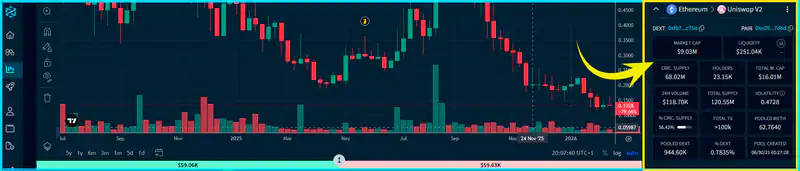
The liquidity box on Pair Explorer shows how much capital is in the pool. Experienced traders analyze liquidity levels as follows:
$100k–$1M: Healthier and more reliable trading environment.
Over $1M: Strong and stable liquidity base.
Liquidity in DEXTools
Step 2: Verify Liquidity Locks
In the pool information section, DEXTools displays whether liquidity is locked, burned, or neither. Locks are often externally verified via links to services like Team Finance or UNCX.
Pro Tips for Lock Analysis
Look for high lock percentages with long durations.
Be cautious of short locks used for marketing purposes.
Avoid tokens with zero lock status.
Step 3: Assess LP Distribution
Decentralized ownership of LP tokens is a healthy sign. Use Pair Explorer to track distribution and detect red flags like concentrated LP ownership.
Key Indicators
Red Flags:
One wallet controlling the majority of LP tokens.
Developer wallets among LP holders.
Frequent sudden LP withdrawals.
Healthy Signs:
Diverse distribution of LP ownership.
Locked tokens with long durations.
Gradually increasing liquidity.
Step 4: Monitor Liquidity Trends
A single liquidity snapshot provides limited insight. Instead, watch for consistent trends. Pair Explorer allows you to:
Track liquidity growth or declines over time.
Compare volume changes relative to liquidity.
Identify sudden liquidity removals.
Step 5: Compare Volume and Liquidity
The ratio between trading volume and liquidity is a powerful metric. Healthy tokens show proportional growth in both metrics, while scam tokens often display disproportionate volume against minimal liquidity.
Example Case Study: Memecoin Analysis
Here’s how to apply liquidity analysis:
Token 1:
Liquidity: $120k
24h Volume: $2.5M
LP Locked: Not detected
Top Holder: Single wallet with 82%
Evaluation: High volume-to-liquidity ratio, no lock, and concentrated LP ownership make this risky.
Token 2:
Liquidity: $450k
24h Volume: $900k
LP Locked: 90% for 6 months
Ownership: Decentralized LP distribution
Evaluation: Balanced metrics and structural health suggest lower risk.
Tips for Advanced Liquidity Analysis
Look for Growing Liquidity Floors
Tokens with a progressively higher liquidity floor reflect strong market support.
Track Stealth LP Adds
Teams adding liquidity to stabilize prices can be identified through DEXTools’ real-time data.
Beware of Lock Expiry Dates
Pay attention to unlock timers, as rug pulls frequently occur upon liquidity unlocks.
Combine Liquidity Insights with Other Metrics
Assess liquidity alongside holder growth, buy-sell pressure, and contract audits for comprehensive insights.
Conclusion
Mastering liquidity analysis transforms casual memecoin trading into a data-driven strategy. Tools like DEXTools Pair Explorer provide real-time, actionable insights that help traders identify opportunities and avoid risks. By focusing on liquidity structure, lock status, ownership, and trends, you can navigate the fast-moving world of memecoins with confidence.
Start exploring DEXTools today here and discover your next high-potential crypto opportunity!
Disclaimer: This article is for informational purposes only and does not constitute investment advice, financial advice, trading advice, or any other kind of advice. DEXTools does not recommend buying, selling, or holding any cryptocurrency or token. Users should conduct their own research and consult with a qualified financial advisor before making any investment decisions. Cryptocurrency investments are volatile and high-risk. DEXTools is not responsible for any losses incurred.