
The $6.3 Billion Binance Hack: A Clear Reminder That Custody Still Matters
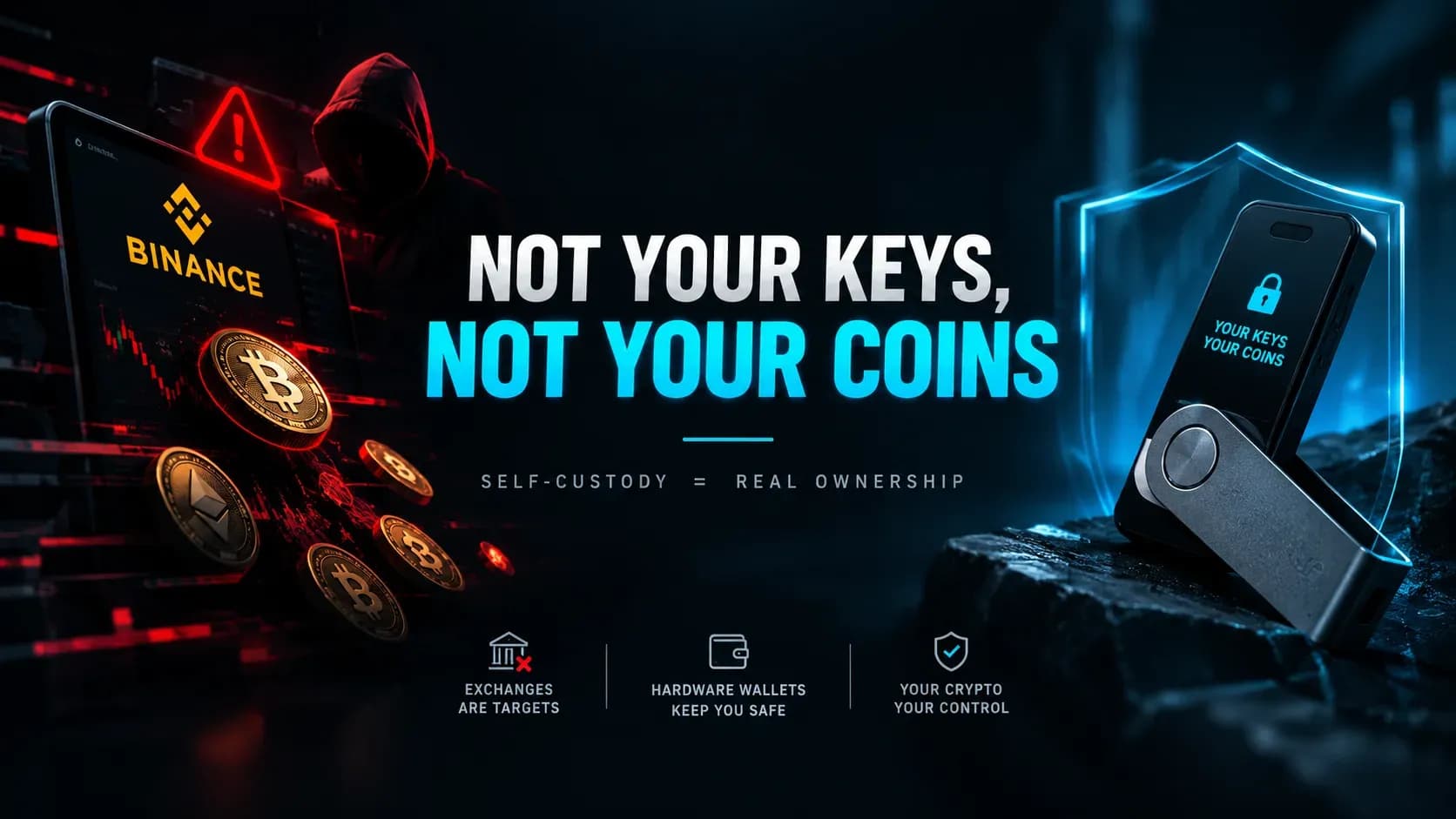
On October 29, 2026, attackers drained approximately $6.3 billion from Binance’s hot wallets in roughly 20 minutes. It is the largest cryptocurrency theft on record - more than four times the size of the previous record, the $1.5 billion Bybit hack in February 2025.
According to Binance, the incident began with a compromised engineer’s laptop that allowed access to internal systems capable of submitting withdrawal transactions. The exchange has stated that no private keys were leaked. Roughly $3 billion of the stolen assets - primarily stablecoins - has been frozen through cooperation with issuers and blockchain partners.
Binance has committed to covering all losses
Binance has publicly stated that it will make users whole. The company has set aside more than $6.34 billion from its Secure Asset Fund for Users and corporate treasury to replace the stolen assets. It has already acquired the majority of the affected tokens and is purchasing the remainder through market and over-the-counter channels. In official updates, Binance has emphasized that user funds remain safe and that the company, not its customers, will absorb the financial impact. Withdrawals remain paused while security measures are completed.
This response is appropriate. It does not, however, remove the underlying structural risk.
The persistent risk of centralized custody
When assets are held on a centralized exchange, the user does not control them directly. The exchange maintains custody. This creates a single point of failure: the platform’s systems, access controls, and personnel become the security perimeter.
The principle “not your keys, not your coins” remains accurate. Ownership on a public blockchain is defined by control of the private keys. In this case, attackers did not need to steal keys; they only needed to compromise the internal processes that authorize withdrawals. Similar incidents have occurred repeatedly across major centralized platforms. Even when an exchange has the resources to reimburse users, customers temporarily lose access and remain dependent on the company’s solvency and decisions.
A better approach: tools that keep you in control
DEXTools has long focused on giving traders better visibility and tools without forcing them to surrender custody. Its trading bot lets users execute faster with features like limit orders, take-profit, and stop-loss, while assets stay under their control. Built directly into the DEXTools interface, the bot enables one-click execution across multiple chains without requiring users to move funds to a third-party platform.
PerpTools takes this further
PerpTools, the official perpetual futures platform from the DEXTools team, is built on the same principle. It is non-custodial:
• Funds go into audited on-chain vault contracts
• Trades and withdrawals require your wallet signature
• Neither the platform nor its infrastructure holds your private keys
• Your assets remain accessible even if the interface is unavailable
You get order-book trading, leverage, and risk tools - plus access to AI-powered agents - without transferring custody to a third party. It removes the exact category of risk that allowed billions to leave Binance’s systems in minutes.
Binance’s commitment to cover the losses is a responsible step. The broader lesson is unchanged: the most secure way to trade is still the one in which users retain control of their keys. DEXTools’ products, including its trading bot and PerpTools, are built around that principle.